Geology,
Aurora Phosphate Mine,
NC Coastal Plain,
NC Minerals
The Coastal Plain Province is located in the eastern region of North Carolina; it covers nearly 45% of the state's land area and consists of stair-step-like planar terraces that gently dip seaward. Elevations range from 300 to 600 feet above sea level to sea level.

The North Carolina Coastal Plain is a dynamic area, it gets its name due to its interaction with the coastal waters and its overall planiform (flat) nature.
From the ribbons of sand we call the barrier islands, to sounds, estuaries, meandering rivers, swamplands, and pocosin forests, the Coastal Plain offers a suite of interesting environments because of its intimate relationship with water. This interaction between land and water allow for some very rich and diverse ecosystems in the Coastal Plain region, it also has afforded the growth of agriculture due to its rich organic soils.

Even the strata that make up the Coastal Plain are comprised of marine-related or fluvially-related sediments revealing that the Coastal Plain has been subjected to fluctuations in sea level. We know how the Coastal Plain formed by studying these stratigraphic layers (called Formations, members, and intervals) that have built up over time.

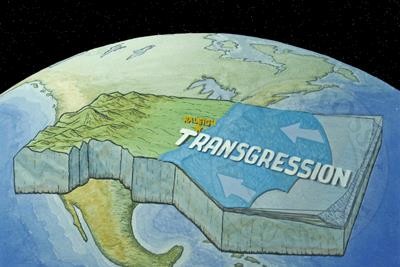 180 million years ago, (during the Jurassic Period) North Carolina was comprised of a rocky coastline. This coastline was located roughly west of the present fall-line (Interstate 95 parallels this fall-line). During periods of low sea level (regressive events), sediment from erosion of the western and central portion of North Carolina began to build up a plain of sediment which today exists as our Coastal Plain. During intervals of high sea level (transgressive events) the Coastal Plain was inundated by ancient seas.
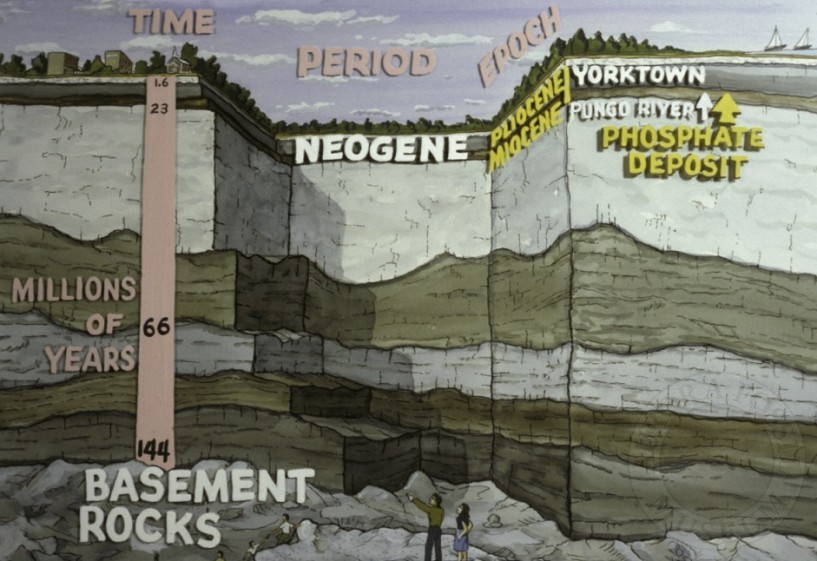
So the Coastal Plain developed as a result of sediment accumulation from both transgressive and regressive events. Scientists know this by the presence of both marine (in the form of limestone and shell beds), and terrestrial (in the form of fluvially-derived clay, silt, and sand) sedimentation.
Text by C. Crane, 2015
Images and information from Rusty Walker and Whiting Toler