Invertebrates | Aurora Fossil Museum
Invertebrate fossils are very important to scientific studies for they are key fossils in the interpretation of the environment of deposition and stratigraphic sequences.


Invertebrates
Our Collections:
Collections,
Vertebrates,
Invertebrates,
Indigenous Artifacts,
Rocks & Minerals
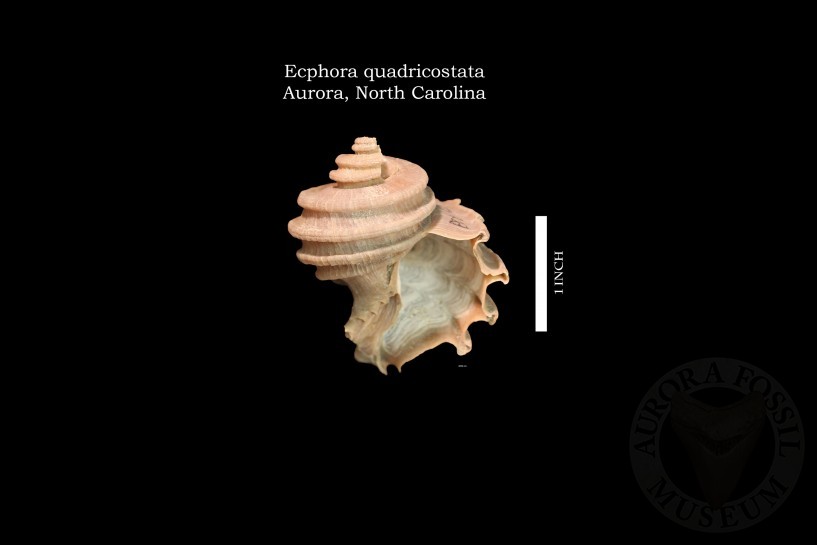
Invertebrate fossils are very important to scientific studies for they are key fossils in the interpretation of the environment of deposition and stratigraphic sequences. Some invertebrate fossils, due to their geographic distribution, abundance, rapid evolution, and short range are designated as index fossils. Because index fossils are key indicators of certain geologic units, investigators can easily decipher the relative age of strata during field studies. The invertebrates discovered in the neighboring phosphate mine consist of: Microfossils: Foraminifera (fuh-ram-uh-nif-er-uh) •Are single-celled organisms (protists) with shells or tests. Cniderian (nahy-dair-ee-uh n): •Are animals characterized by specialized stinging structures in the tentacles surrounding the mouth. •The Cniderian fossil record of the Nutrien Phosphate Mine is represented by coral. 
Bryozoan (brahy-uh-zoh-uh n): •Are various small aquatic invertebrate animals capable of forming vast moss-like or branching colonies attached to seaweed or hard surfaces. 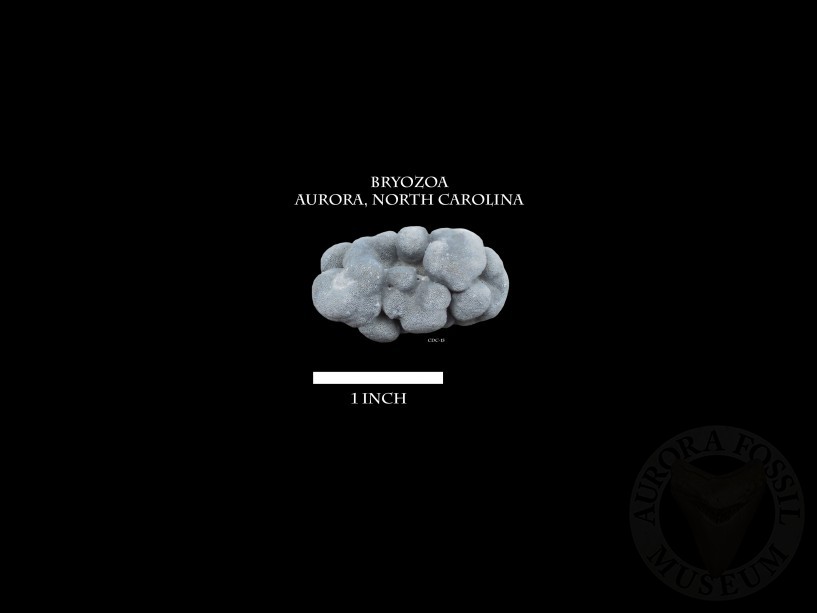
Arthropods (ahr-thruh-pod): •Are invertebrates having a segmented body, jointed limbs, and usually a chitinous shell that undergoes molting. •Include crabs, ostracodes, and barnacles. 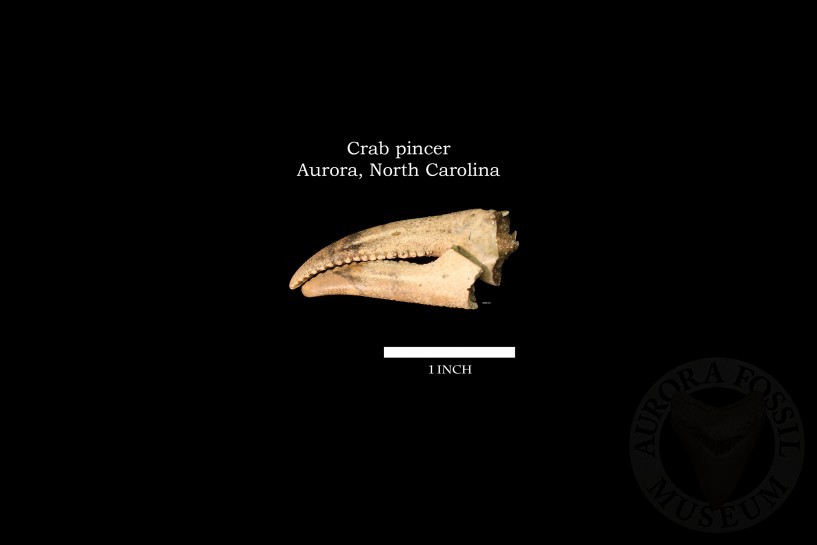
Molluscs (mol-uh sk): •Consist of invertebrates typically having a calcareous shell of one, two, or more pieces that wholly or partly enclose the soft, unsegmented body. •Include bivalves (clams, scallops), gastropods (snails), cephalopods, and scaphopods. 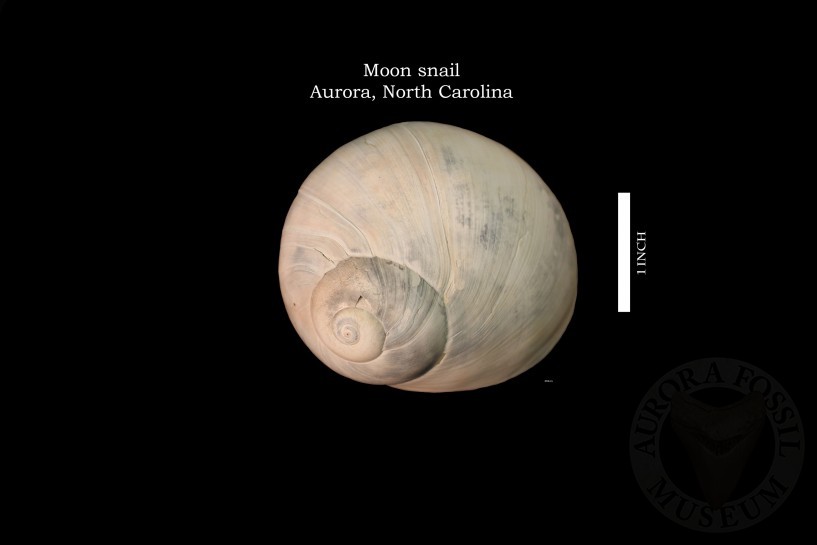
Echinoderm (ih-kahy-nuh-durm): •Any of various marine invertebrates having a lattice-like internal skeleton composed of calcite and usually a hard, spiny outer covering. •Include starfish, sea urchins, and sand dollars 
Text by C. Crane, images courtesy of D. VanDeVelde and C. Crane References: •Emmons, E., 1858. Report of the North Carolina Geological Survey, Agriculture of the Eastern Counties: together with the Description of the Fossils of the Marl Beds. Holden & Wilson, Raleigh, North Carolina. 315 pp. •Prothero, Donald R. Bringing Fossils to Life: An Introduction to Paleobiology, 2nd Edition. New York: McGraw Hill, 2004. Print. •Ray, Clayton E., David J. Bohaska, Irina A. Koretsky, Lauck W. Ward, and Lawrence G. Barnes, eds. Geology and Paleontology of the Lee Creek Mine, North Carolina, IV. Martinsville, VA: Virginia Museum Of Natural History, No. 14, 2008. Print. |